1. What is a commercial kitchen hood and why is it important?
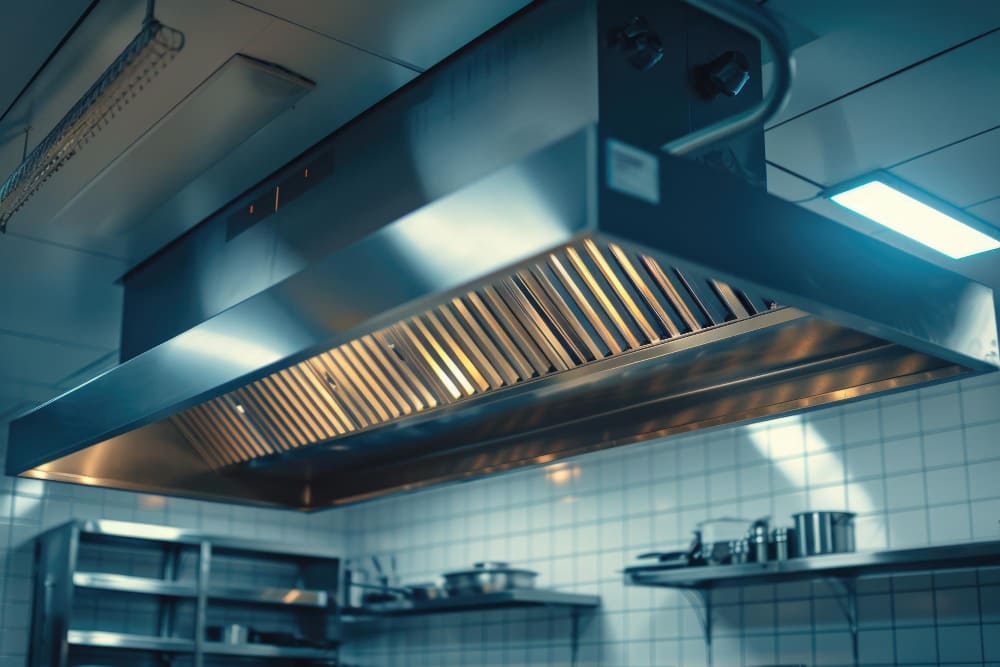
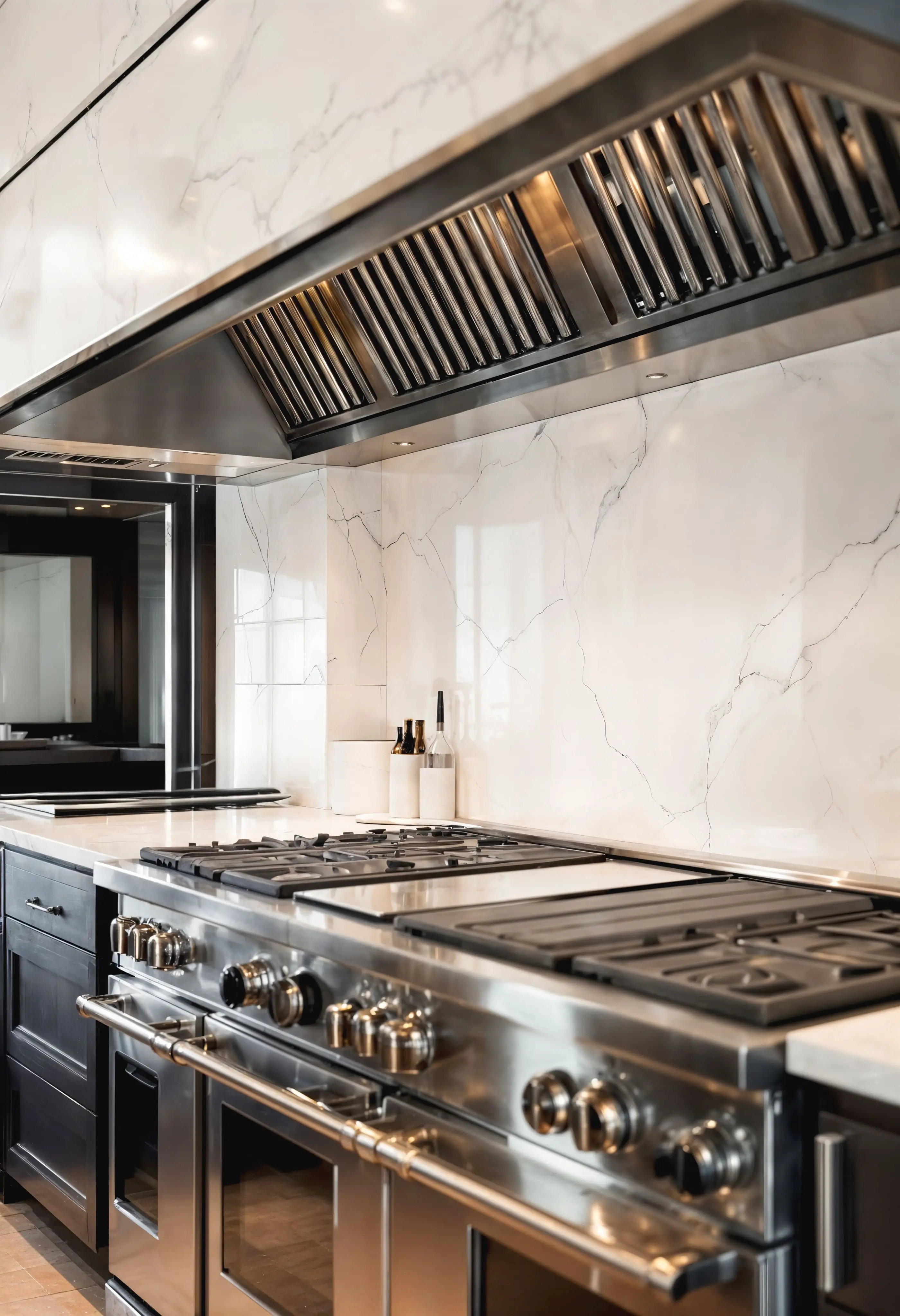
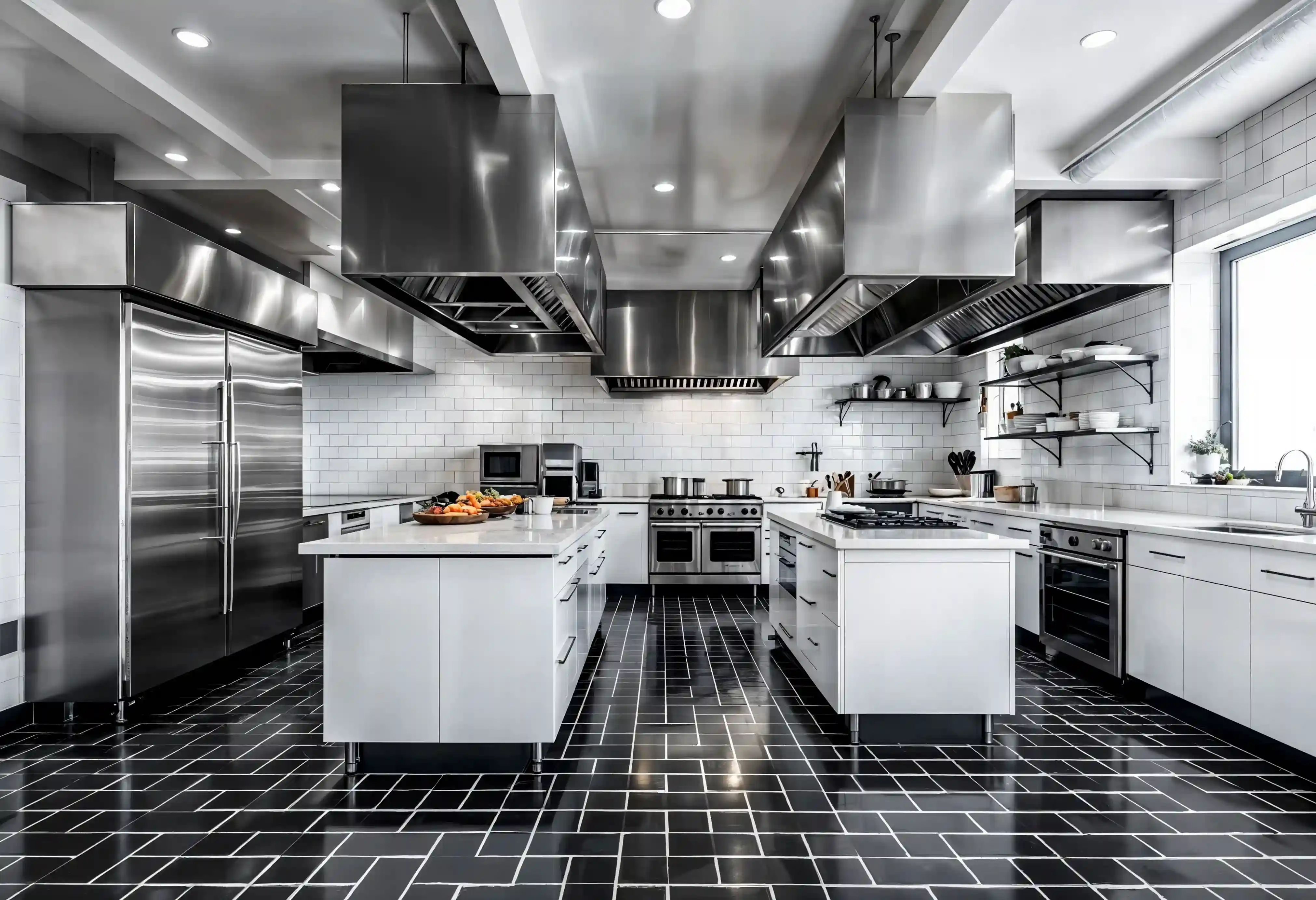
A: commercial kitchen hood is a ventilation system installed above cooking equipment to remove heat, smoke, grease, and odours. It protects staff, improves air quality, reduces fire risks, and ensures hygiene compliance. Proper hood systems also maintain comfortable working temperatures and prevent grease accumulation inside ducts and ceilings.
2. Is a kitchen hood mandatory for restaurants in Dubai?
Yes, commercial kitchens must install approved hood systems as per regulations set by Dubai Municipality and Dubai Civil Defence. Without proper ventilation and fire-rated duct systems, restaurants cannot receive operational approval or pass safety inspections required for licensing.
3. What are the different types of commercial kitchen hoods?
Commercial kitchen hoods include misty hoods for heavy grease extraction, UV hoods that break down grease using ultraviolet technology, standard canopy hoods for moderate cooking, and ventless hoods for restricted duct environments. Each type is selected based on kitchen size, cuisine style, cooking volume, and regulatory approval requirements.
4. How do I choose the right kitchen hood for my restaurant?
Choosing the right kitchen hood depends on cooking equipment, cuisine type, heat output, kitchen layout, and ceiling height. Proper airflow calculation and capture velocity assessment are essential. A professional site evaluation ensures the hood matches operational needs while meeting safety standards and avoiding airflow imbalance.
5. What is the difference between a misty hood and a UV hood?
Misty hoods use advanced filtration to separate grease particles before they enter the duct system, reducing contamination. UV hoods use ultraviolet light to chemically break down grease molecules inside the hood chamber. UV systems are typically preferred for high-volume kitchens operating long hours daily.
6. How much does commercial kitchen hood installation cost in Dubai?
Installation costs vary depending on hood size, duct length, exhaust fans, ecological units, and compliance requirements. Small café kitchens cost less than large hotel or industrial facilities. A proper site inspection and airflow design assessment are necessary to provide accurate pricing and authority-compliant estimates.
7. What are the Dubai regulations for kitchen hood installation?
Kitchen hood installations must meet airflow standards, fire-rated duct specifications, grease filtration requirements, and inspection approvals mandated by Dubai Municipality and Dubai Civil Defence. Non-compliance can delay trade license approvals and lead to penalties or operational restrictions.
8. How often should commercial kitchen hoods be cleaned?
Cleaning frequency depends on kitchen usage and cooking intensity. Heavy-duty kitchens require weekly filter cleaning and periodic duct inspection. Regular maintenance prevents grease buildup, reduces fire hazards, improves airflow efficiency, and ensures continued compliance with local safety standards and inspection requirements.
9. What is a ventless hood and where is it used?
A ventless hood is a ductless system that filters air through multi-stage filtration and recirculates it back into the kitchen. It is typically used in malls or locations where external ducting is restricted. Approval depends on cooking type and compliance with safety regulations.
10. How long does kitchen hood installation take?
Installation timelines depend on kitchen size and system complexity. Small commercial kitchens may require a few days, while large hospitality or industrial kitchens may take one to two weeks. The timeline includes duct fabrication, hood mounting, exhaust fan installation, and testing for compliance approval.
11. What happens if a kitchen hood is improperly installed?
Improper installation can cause smoke leakage, excessive heat, grease accumulation, airflow imbalance, and increased fire risks. It may also lead to failed inspections and regulatory penalties. Correct positioning, airtight duct connections, and balanced airflow design are critical for long-term performance and safety compliance.
12. Do UV kitchen hoods reduce fire risk?
Yes, UV kitchen hoods significantly reduce fire risk by breaking down grease particles before they accumulate inside ducts. This reduces grease buildup, lowers cleaning frequency, and improves overall safety. They are particularly beneficial for high-volume kitchens with continuous cooking operations.
13. Can I install a kitchen hood without an exhaust duct?
In certain cases, approved ventless hood systems can be installed without external ducting. However, traditional heavy cooking equipment usually requires ducted exhaust systems to meet fire and ventilation standards. Approval depends on cooking load, appliance type, and regulatory compliance requirements.
14. How do I get kitchen hood approval in Dubai?
Approval requires technical drawings, airflow calculations, fire-rated duct specifications, and inspection clearance from Dubai Civil Defence and Dubai Municipality. Professional contractors typically handle documentation, submissions, inspections, and final commissioning certification.
15. Who should I hire for kitchen hood supply and installation in Dubai?
You should hire experienced contractors who understand airflow engineering, fire safety compliance, and Dubai approval processes. Reliable providers conduct detailed site assessments, ensure proper hood sizing, use durable materials, and deliver tested systems that perform efficiently under real commercial cooking